
Introduction
In industrial packaging, material choices are rarely questioned, only repeated. Wood and plastic continue to dominate not because they are always the most efficient options, but because they have been historically trusted to deliver strength and protection. Paper, by contrast, has been dismissed as structurally inadequate, associated more with disposability than performance.
That assumption is now technically outdated, as advancements in paper honeycomb structures have redefined what paper-based materials can withstand. Designed for load-bearing, impact absorption, and dimensional stability, these solutions are increasingly replacing wood and plastic across demanding applications, from large appliance packaging and automotive components to EV batteries and industrial equipment transport. The discussion today is no longer about whether paper can perform at an industrial level, but why legacy materials continue to be specified when engineered paper substrate consistently delivers comparable strength, lower weight, and measurable environmental gains.
Myth 1: Paper Can’t Handle Heavy Loads
This is the most common misconception. Conventional paper may lack strength, but engineered paper honeycomb packaging is a different material and structure altogether.
Honeycomb structures are inspired by nature. Just like a beehive distributes weight evenly, paper honeycomb uses a hexagonal cell structure that delivers exceptional compression strength while remaining lightweight. In real-world industrial applications, honeycomb panels are used in:
- Air conditioner packaging materials
- Chimney packaging materials
- Solar panels packaging
- Automotive component packaging.
- Battery packaging boxes for EVs, etc.
Often, honeycomb panels match or exceed the load-bearing capacity of plywood while weighing up to 60% less. This makes them ideal for industrial shipping solutions where strength and efficiency must work together.
Myth 2: Plastic Is Always More Durable
Durability is not simply a question of the toughness of the material, and plastic is mostly selected because of its moisture and impact resistance. It has to do with structural performance in actual conditions.
Paper honeycomb packaging solutions are made to absorb shock, spread vibration, and protect against point-load damage. That is why they are commonly used in the light packaging of LED lights, the packaging material of yarns, and also in the packaging material of exports to Europe, where the long transit durations require consistent protection. Recycled Kraft paper-based packaging is capable of slight deformation when stressed and then recovering, unlike rigid plastic; this minimises product damage during drops or when making sharp turns. For fragile or high-value goods, this controlled energy absorption can outperform plastic crates or thermoformed packaging.
Myth 3: Paper Isn’t Suitable for Industrial Environments
Modern recycled Kraft paper-based packaging is not basic cardboard. It is precision-engineered for specific industrial needs.
At Honecore, custom packaging solutions are developed for demanding uses such as:
- Fire-retardant EV battery packaging
- EV charger packaging
- Automotive industry packaging solutions
- Pallet boxes and paper pallets
- Void fillers for heavy equipment, etc.
With moisture-resistant coatings, flame-retardant treatments, and reinforced honeycomb cores, paper-based systems now align with safety and performance standards required by automotive, energy, and appliance manufacturers. This is why procurement teams increasingly partner with paper honeycomb specialists instead of defaulting to wood or plastic suppliers.
Myth 4: Wood Is the Strongest Natural Option
The industry has trusted wood for decades, but it comes with limitations, such as variable quality, splintering, inconsistent strength, and maximising regulatory pressure in global exports.
Paper honeycomb offers uniform strength, predictable performance, and easier compliance with international shipping regulations. For export packaging for Europe, paper-based solutions eliminate the need for fumigation and phytosanitary certification required for wooden pallets.
Many paper pallet suppliers now deliver pallets that support comparable loads to wooden pallets while improving space utilisation and lowering freight costs. For logistics teams, this translates into efficiency without compromising safety.
Real-World Strength Comparison
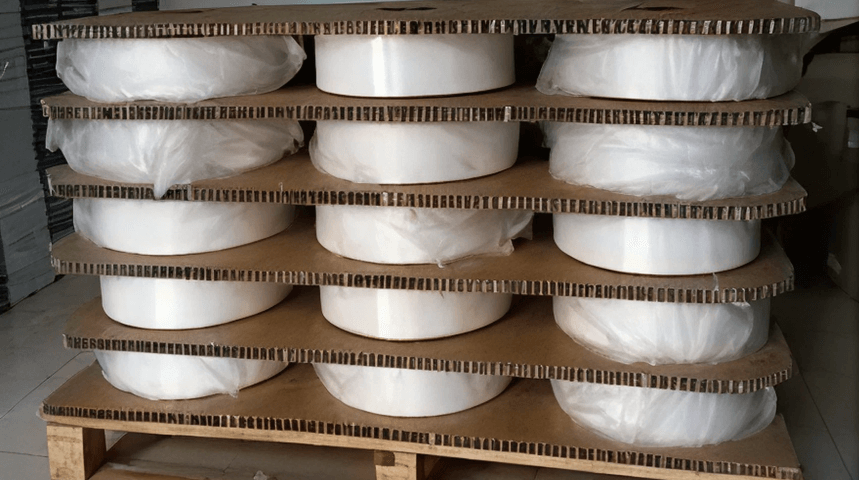
Let’s simplify the comparison:
- Wood pallets: Strong but heavy, inconsistent, and regulation-heavy
- Plastic pallets: Durable but expensive and environmentally complex
- Paper honeycomb pallets: Strong, recyclable, and export-ready
In controlled tests, honeycomb panels show robust resistance to crushing on the edges and can handle vertical pressure well, which are important factors for suppliers of industrial packaging materials that deal with heavy items.
Why Recycled Paper Base Is the Smarter Industrial Choice
In addition to its strength, the paper-based packaging has shifted with the increasing trend of green packaging solutions. Organisations are experiencing pressure to use less plastic, make it more recyclable, and achieve sustainability without performance decline.
Paper honeycomb packaging supports this shift by offering:
- High strength-to-weight ratio
- Reduced material consumption
- Easier recycling at the end of life
- Lower carbon footprint compared to plastic and wood
This is why leading manufacturers now consider paper-based packaging among the best eco-friendly packaging material options available today.
Honecore: Redefining Industrial Strength Through Recycled Kraft Paper-Based
As one of the emerging paper honeycomb packaging companies in India, Honecore packaging solutions focus on combining engineering precision with sustainable materials. From small appliance packaging solutions to complex EV battery packaging, Honecore works closely with engineering and procurement teams to produce packaging that performs in real industrial environments.
With manufacturing and supply capabilities aligned to industrial demand, Honecore continues to redefine what paper can do.

Conclusion: Rethinking Strength in Packaging
Strength is no longer about choosing the heaviest material. It’s about choosing the smartest structure. Honeycomb packaging proves that paper can stand shoulder to shoulder with wood and plastic and often outperform them.
For industries seeking performance, compliance, and sustainability, fibres are no longer an option. It’s the future.