

Introduction
For supply chain managers, freight is no longer a controllable line item as it is a volatile cost centre. Rising fuel prices, tighter capacity, dimensional weight pricing, and increasing damage claims have combined to put logistics under sustained pressure. While optimisation efforts often focus on routes, carriers, or inventory velocity, one lever remains consistently underutilised: packaging weight.
Lightweight packaging is not a cost-cutting shortcut. When engineered correctly, it is a strategic operational decision, one that directly impacts freight spend, handling efficiency, damage rates, and sustainability metrics without compromising product protection. This is especially relevant across industrial packaging solutions, automotive industry packaging solutions, and appliance-led supply chains, where volume and weight compound costs rapidly.
Freight Economics: Why Weight Still Matters
Modern freight pricing is driven by two variables: actual weight and dimensional (volumetric) weight. For most road, sea, and air carriers, whichever is higher determines the charge. Packaging that is over-engineered in material thickness or bulk quietly inflates both, particularly in industrial shipping solutions and export packaging for Europe, where compliance and container limits are strict.
Consider a typical palletised shipment:
- 1,000 cartons
- Each carton weighs 500 grams more than structurally required
- Total excess weight: 500 kg per pallet
At an average domestic freight rate of Rs 6– Rs 8 per kg (or higher for express or air freight), that single pallet incurs Rs 3,000– Rs 4,000 in avoidable cost per movement.
A wooden pallet weighs up to 15 kilos. A comparative honeycomb pallets weights only 6.5 kilos. For a container carrying 40 pallets that is a saving of 240 kilos. For a factory shipping 1000 containers, the saving is 2,40,000 kilos or 240 Tonnes. At freight costs of Rs. per 7 Kg, we are talking about a saving of over Rs. 16,00,000 per annum.
Multiply this across monthly dispatches of Automotive component Packaging solutions, industrial Packaging solutions, or export SKUs, and the annual leakage becomes material.
Lightweight packaging using optimised paperboards and structural designs can reduce pack weight by 10–30% while maintaining compression strength and transit performance.
Strength Without Mass: Engineering, Not Downgrading
A common misconception is that lighter packaging is inherently weaker. In reality, performance depends on material architecture, not mass alone.
Advancements in packaging engineering have made it possible to:
- Increase strength-to-weight ratios through a layered honeycomb structure
- Use high-strength, low-weight boards that offer stiffness without excess material
- Optimise corrugation boxes and internal geometries to improve load-bearing capacity
- Replace solid substrates with reinforced mono-material designs
This shift is particularly relevant for automotive components packaging, battery packaging designs, EV components packaging, and industrial & engineering components packaging, where protection, consistency, and weight control are equally critical.
Handling Efficiency and Throughput Gains
Weight reduction delivers benefits beyond freight invoices. Lighter packs improve handling ergonomics, especially in high-throughput warehouses where manual touchpoints remain unavoidable, common in packaging material suppliers serving appliances, lighting, and industrial components.
Operational advantages include:
- Faster pick-and-pack cycles
- Reduced operator fatigue and injury risk
- Improved conveyor and sorter performance
- Lower wear and tear on material handling equipment
In automated environments supporting LED lights packaging, solar panels packaging, and air conditioner packaging materials, lighter packaging improves uptime and lowers maintenance costs across the line.
Damage Reduction: Less Force, Fewer Failures
Transit damage is often linked to inertial forces. Heavier packs experience greater impact energy during drops, vibrations, and sudden decelerations. Lightweight packaging, when correctly designed, reduces these forces while maintaining protective geometry.
This is particularly important for fragile or high-value goods such as engineered precision components, electrical goods and electronics-heavy SKUs. Reduced momentum translates into fewer damage claims, lower returns, and improved customer confidence.
Container and Vehicle Optimisation
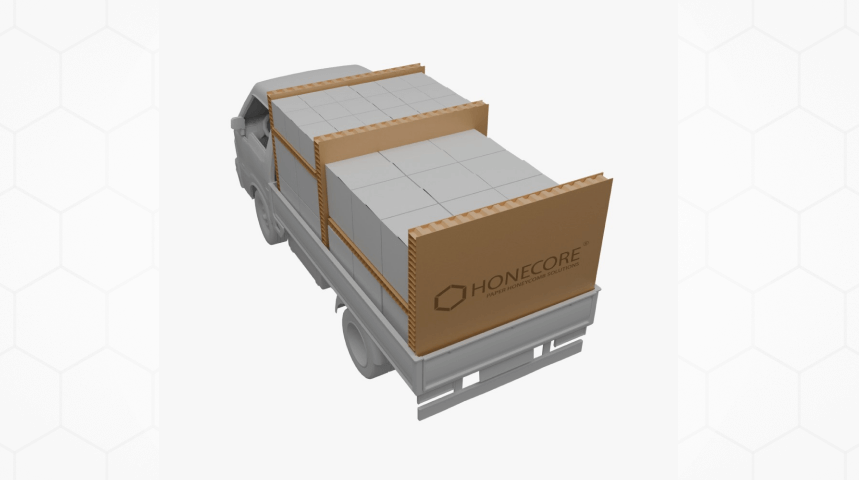
Packaging weight directly affects payload efficiency. Lighter cartons allow:
- Higher product volume per container without breaching weight limits
- Better cube utilisation when combined with right-sized pack designs
- Reduced axle load stress for road transport compliance
For exporters and paper pallet suppliers, even marginal weight reductions can eliminate entire container movements annually. When combined with pallet boxes and void fillers, lightweight systems significantly improve container economics.
Sustainability Alignment Without Trade-offs
While sustainability is often positioned as a separate agenda, lightweight packaging naturally aligns with it:
- Lower material consumption
- Reduced fuel burn per shipment
- Lower Scope 3 emissions per unit moved
For organisations seeking green packaging solutions and the best eco friendly packaging material, lightweight systems deliver environmental gains without operational compromise, especially when working with experienced industrial packaging material suppliers.
Implementation: A Data-Led Transition
The shift to lightweight packaging should be driven by testing, not assumptions. Best-practice implementation involves:
- Compression and transit simulation testing
- Pilot runs on high-volume SKUs
- Damage rate and freight cost benchmarking
- Collaboration between packaging, procurement, and logistics teams
The objective is not to minimise material, but to optimise performance per gram.
Honecore: Your Innovative Packing Partner
This is where engineered packaging becomes a strategic differentiator. Honecore specialises in smart engineered solutions made from paper honeycomb, developed for industrial products where freight efficiency and protection must coexist. Using kraft paper based honeycomb, Honecore delivers high compression strength, excellent energy absorption, and dimensional stability at reduced weight.
These engineered solutions using paper honeycomb are widely deployed across industrial packaging solutions, including automotive component packaging, EV charger packaging, battery packaging box applications, and Honeycomb for steel doors. Honecore also designs paper honeycomb packaging systems such as pallet boxes, void fillers, and lightweight pallets, supporting void filler suppliers and Paper pallet suppliers in complex supply chains.
As a paper honeycomb specialist and one of India’s trusted honeycomb packaging companies, Honecore works with OEMs and industrial packaging material suppliers to deliver custom packaging solutions that balance freight efficiency, protection, and sustainability. Backed by multi-location manufacturing and aligned with Honecore packaging solutions, every design ensures each gram contributes to operational efficiency and reduced total cost of ownership.

Conclusion: Packaging as a Strategic Lever
In an environment where freight volatility is the norm, supply chain resilience is built on controllable efficiencies. Lightweight packaging is one such lever, as it is measurable, scalable, and immediately impactful.
For organisations moving millions of units annually, the question is no longer whether packaging weight matters. It is whether the current packaging strategy is actively working against freight economics, handling efficiency, and damage reduction.
The most competitive supply chains are not the ones that ship cheaper but the ones that ship smarter.